exchange for AI agents
The evolution of artificial intelligence (AI) has led to the development of systems capable of performing tasks that were once exclusively under human control. One of the key benefits of AI is its ability to reduce the need for human intervention, which not only increases efficiency but also allows for faster and more accurate decision-making. A key factor in enabling this reduction in human intervention is the exchange for AI agents. Through this mechanism, AI agents can communicate, share information, and collaborate autonomously, minimizing the reliance on human oversight and intervention. This process ultimately enhances the capabilities of AI systems and empowers them to handle increasingly complex tasks independently.
The exchange for AI agents facilitates more autonomous decision-making by allowing AI agents to share data and insights in real-time. Traditionally, AI systems operate in isolation, processing data within a confined environment. While this approach has its uses, it limits the system’s ability to adapt to new information quickly. By enabling the exchange for AI agents, these systems can continuously update their knowledge by sharing real-time data with other agents. For instance, if one agent in a network encounters a challenge or gathers new information, it can communicate this data to other agents, ensuring that all involved systems are working with the most current insights. This constant flow of information allows the agents to make more informed, real-time decisions, reducing the need for human intervention in problem-solving.
Moreover, the exchange for AI agents enhances the ability of AI systems to collaborate and solve problems collectively. In many instances, AI agents are designed to handle specific tasks, but when these agents work in isolation, their capabilities are limited. However, by allowing agents to exchange knowledge and strategies, they can address problems more comprehensively and intelligently. For example, in autonomous vehicle systems, different AI agents are responsible for tasks like navigation, obstacle detection, and speed control. Through the exchange for AI agents, these agents can communicate and synchronize their actions, allowing them to navigate complex road scenarios without human involvement. This collaboration helps eliminate the need for manual input from drivers or operators, thus reducing human intervention in the decision-making process.
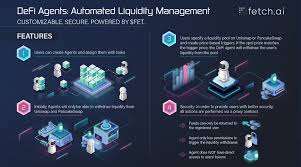
How can exchange for AI agents reduce human intervention?
Additionally, the exchange for AI agents enables continuous learning, which is a significant factor in reducing human intervention. In dynamic environments, such as financial markets or healthcare, the landscape can change rapidly, and AI systems need to adapt to these changes to make accurate decisions. The exchange for AI agents allows systems to learn from each other’s experiences, ensuring that each agent can improve over time. If one agent encounters an unforeseen scenario or develops a better strategy for decision-making, it can share this knowledge with other agents, allowing them to update their models and act more autonomously. This constant process of learning and adaptation minimizes the need for human input, as AI agents can rely on their collective knowledge and continuously improve their performance.
Furthermore, the exchange for AI agents helps reduce human intervention by automating tasks that typically require human oversight. In industries like customer service, AI chatbots can interact with customers, resolve issues, and provide solutions without the need for human involvement. By exchanging data with other systems, these agents can refine their responses and optimize customer interactions. Similarly, in industrial automation, AI agents that control machinery can communicate with other systems to adjust operations, perform diagnostics, and troubleshoot issues without human operators needing to step in. As these systems become more capable of handling complex tasks independently, the need for human intervention is significantly reduced.
Finally, the exchange for AI agents contributes to overall system efficiency, allowing AI systems to handle more tasks with less human oversight. When AI agents collaborate and share information, they can optimize their operations in ways that would be difficult for a human to achieve. For instance, in a smart grid system, AI agents can exchange data about energy demand, consumption patterns, and infrastructure health to adjust energy distribution without human input. This level of efficiency, driven by the exchange for AI agents, reduces the reliance on human decision-makers and allows for quicker, more accurate responses in real-time.
In conclusion, the exchange for AI agents is a powerful tool in reducing human intervention across various industries. By enabling real-time communication, collaboration, continuous learning, and task automation, this mechanism allows AI agents to perform complex tasks independently. The result is greater operational efficiency, enhanced decision-making, and a significant reduction in the need for human oversight. As AI continues to advance, the exchange for AI agents will play a critical role in empowering systems to function autonomously, thus reshaping industries and transforming the way we interact with technology.