The real estate industry is highly competitive, and managing customer inquiries, property listings, site visits, and sales negotiations can be challenging without an organized system. Real estate agents, brokers, builders, and property developers often handle multiple clients simultaneously, making it difficult to maintain consistent communication and follow up on every opportunity.
This is where CRM for real estate business becomes an essential tool. Customer relationship management software helps real estate professionals organize leads, manage customer interactions, automate routine tasks, and track property deals from the first inquiry to the final transaction. With the right CRM solution, businesses can improve productivity, deliver better customer experiences, and create more opportunities for growth.
What Is CRM for Real Estate Business?
CRM for real estate business is a digital platform designed to help property professionals manage leads, customer information, sales activities, and client relationships in one centralized location.
Instead of relying on spreadsheets, notebooks, and scattered messages, real estate teams can use a CRM system to maintain organized records of prospective buyers, sellers, tenants, and investors.
For example, when someone submits a property inquiry through a website or advertisement, the CRM can record their contact details, property preferences, budget, and location requirements. The sales team can then assign the lead to an agent, schedule follow-ups, and track the customer’s progress throughout the buying journey.
This structured approach helps real estate businesses manage opportunities more efficiently and avoid losing potential customers due to missed communication.
Key Benefits of Real Estate CRM Software
1. Efficient Lead Management
Lead generation is essential for real estate success, but converting inquiries into customers requires consistent follow-up and proper organization.
A CRM system collects leads from multiple sources, including property portals, websites, social media campaigns, and referrals. Agents can categorize prospects according to their budget, preferred location, property type, and buying timeline.
This makes it easier to identify serious buyers, prioritize high-potential leads, and provide relevant property recommendations. Organized lead management also helps teams reduce missed opportunities and improve their conversion process.
2. Automated Follow-Ups and Reminders
Real estate transactions often involve several conversations, property visits, document exchanges, and negotiations. Remembering every follow-up manually can be difficult, especially when agents manage numerous clients.
CRM software can automate reminders, schedule calls, and notify agents about upcoming meetings. Some platforms also support automated emails and messages, depending on their available integrations.
These features help agents maintain regular communication with prospects and ensure that interested buyers receive timely assistance.
3. Better Property and Client Management
Matching customers with suitable properties is an important part of the real estate sales process. A CRM system helps agents maintain customer preferences alongside relevant property information.
For instance, an agent can quickly identify clients searching for two-bedroom apartments within a particular budget or buyers interested in commercial properties in a specific location.
Centralized records improve coordination between sales representatives and make property recommendations more relevant to customer needs.
4. Improved Sales Team Productivity
Real estate teams often need to coordinate lead assignments, site visits, negotiations, and transaction updates. Without a shared system, important information may be overlooked.
CRM for real estate business provides a centralized view of sales activities, allowing managers to assign leads, monitor progress, and evaluate team performance.
Automation reduces repetitive administrative tasks, enabling agents to spend more time meeting customers, conducting property tours, and negotiating deals.
5. Data-Driven Business Decisions
Understanding business performance helps real estate companies identify profitable opportunities and improve their sales strategies.
CRM reporting tools can track lead sources, inquiry volumes, follow-up activities, property interest, and deal conversion rates. Managers can use these insights to determine which marketing campaigns generate valuable leads and where potential customers are dropping out of the sales pipeline.
These reports support better planning, more effective marketing investments, and improved resource allocation.
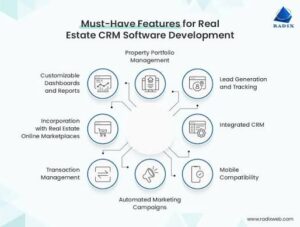
Essential Features to Look For
When choosing CRM for real estate business, consider features that support your company’s sales process.
- Lead management: Capture, organize, assign, and track property inquiries.
- Contact management: Maintain customer details, preferences, and communication histories.
- Property management: Organize listings and match properties with buyer requirements.
- Automated follow-ups: Schedule reminders for calls, meetings, and site visits.
- Sales pipeline tracking: Monitor deals through different stages of the transaction.
- Reporting and analytics: Evaluate agent performance, lead quality, and sales results.
- Mobile accessibility: Allow agents to access customer information while visiting properties.
- Integration capabilities: Connect with property portals, email platforms, marketing tools, and other business applications.
Selecting suitable features helps businesses build an efficient workflow without paying for unnecessary functionality.
How to Choose the Right Real Estate CRM
Before selecting a CRM platform, identify your business requirements, team size, lead volume, and budget. Independent agents may need a simple solution, while property developers and large brokerages might require advanced automation, customized reporting, and multiple user accounts.
Compare available platforms based on ease of use, scalability, data security, integration options, and customer support. Request a demonstration to understand how the software handles your actual sales activities.
Proper employee training and regular data updates are equally important for achieving the best results.
Conclusion
A CRM for real estate business helps agents, brokers, and property developers organize leads, improve customer communication, and manage sales opportunities more effectively. By automating follow-ups, centralizing property information, and providing valuable performance insights, CRM software can simplify daily operations and support better decision-making.
Choosing a solution that matches your business needs can help you build stronger client relationships, improve sales productivity, and create a more consistent property-buying experience. With the right CRM strategy, real estate businesses can strengthen their competitive position and achieve sustainable growth in an evolving property market.